Introduction: Why Warehouse Construction Is a Strategic Business Decision
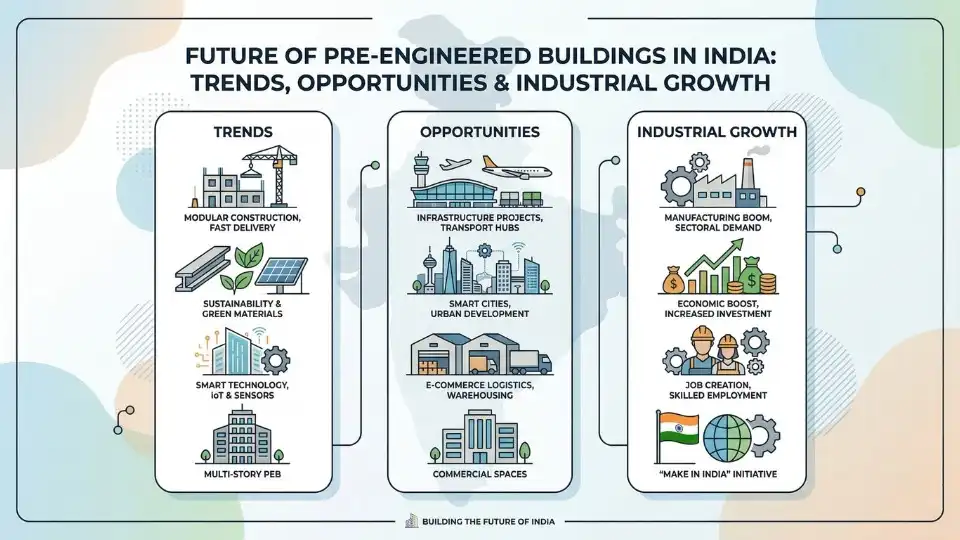
India’s logistics, e-commerce, manufacturing, and export sectors are expanding at record speed. With this rapid industrial growth comes one unavoidable requirement: modern warehouse infrastructure.
Whether you are building:
A manufacturing storage facility
A logistics hub
A distribution center
A cold storage warehouse
Or a large industrial godown
Understanding Warehouse Construction cost, design considerations, and long-term benefits is essential before investing crores into infrastructure.
Today, most industrial leaders prefer Pre-Engineered Building (PEB) warehouse construction due to speed, cost efficiency, and scalability. Companies like Eco Plus specialize in delivering engineered warehouse structures aligned with modern industrial needs.
This complete guide explains everything you need to know about Warehouse Construction cost, design planning, and why PEB is the smarter approach.
What Is PEB Warehouse Construction?
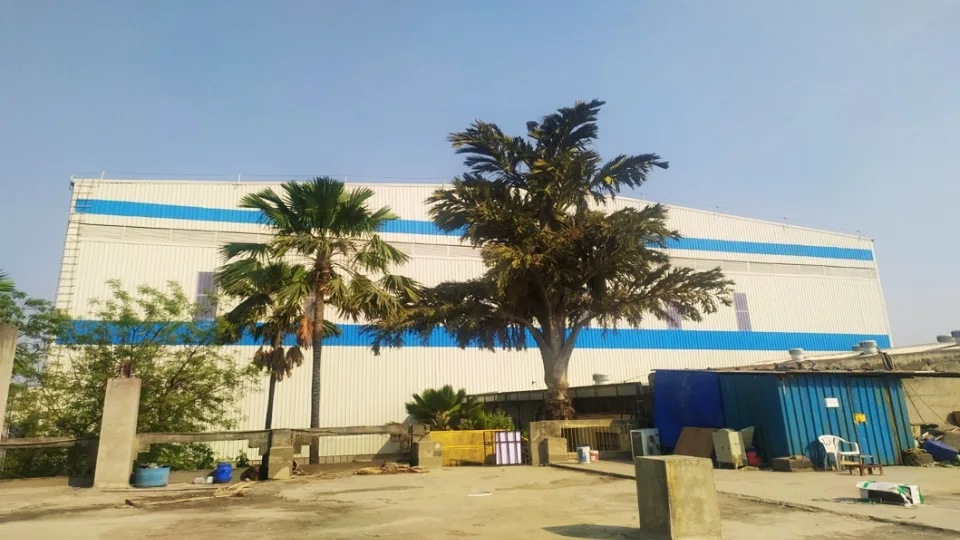
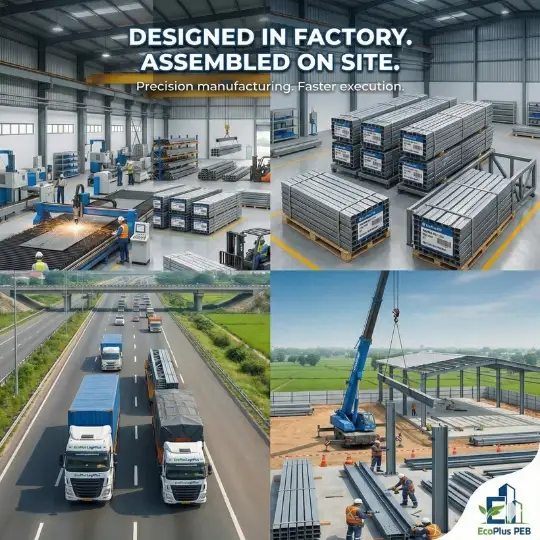
PEB warehouse construction refers to building a warehouse using a Pre-Engineered Building system, where:
Structural components are factory-designed
Steel members are precision-fabricated
Parts are transported to site
Assembly is done using bolted connections
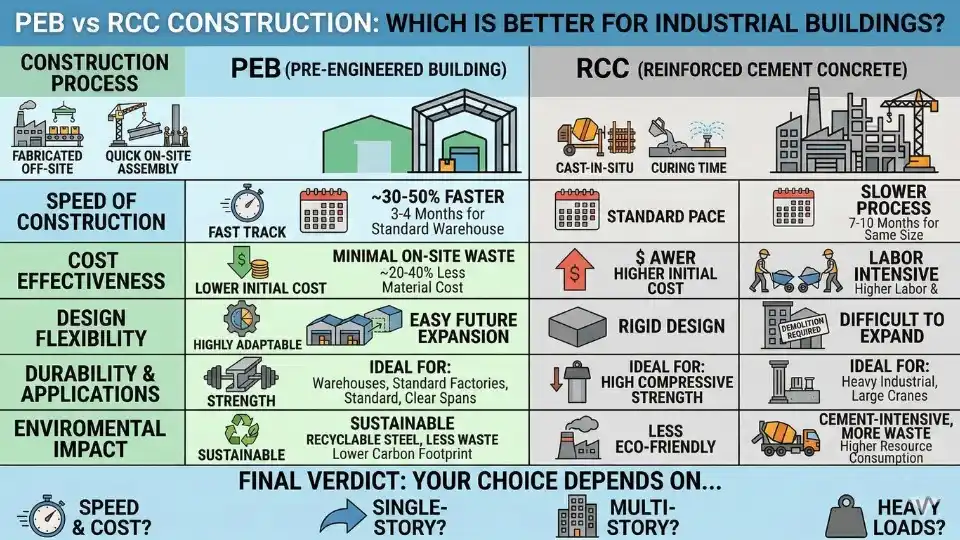
Instead of traditional RCC methods, PEB warehouse systems optimize structural design for load, wind, seismic factors, and storage requirements.
This system directly impacts Warehouse Construction cost, project timelines, and operational efficiency.
Why Warehouse Construction Cost Matters More Than Ever
Warehouse projects are capital-intensive. Poor planning can result in:
Budget overruns
Under-designed structures
Inefficient storage layouts
High maintenance expenses
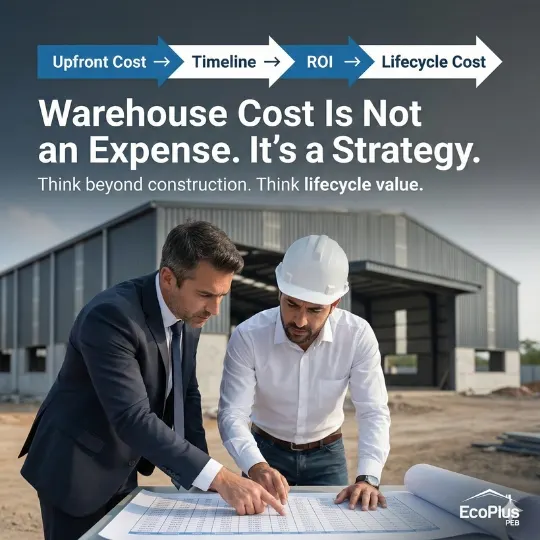
For industrial decision-makers, Warehouse Construction cost is not just about upfront investment—it’s about lifecycle value.
Smart planning ensures:
Lower construction time
Faster ROI
Efficient space utilization
Reduced operational costs
Key Factors Affecting Warehouse Construction Cost
1. Size and Built-Up Area
The total square footage directly influences:
Steel quantity
Roofing area
Cladding material
Foundation requirements
Larger spans increase material cost but reduce internal columns, improving storage efficiency.
2. Span Width & Height
Clear-span warehouses cost more per square meter but offer:
Better racking systems
Smooth forklift movement
Flexible storage layouts
Height affects steel usage and wind load calculations, impacting Warehouse Construction cost.
3. Load Requirements
Warehouse load factors include:
Storage load
Mezzanine load
Crane load (if applicable)
Wind & seismic load
Higher loads require stronger structural members, affecting cost.
5.Roofing & Insulation
Options include:
Single skin sheets
Insulated sandwich panels
Standing seam roofing
Insulated roofing improves energy efficiency but increases initial Warehouse Construction cost.
5.Flooring Specifications
Industrial warehouses often require:
Heavy-duty concrete flooring
Floor hardeners
Polished surfaces
High-load flooring significantly influences project budgets.
6.Location & Site Conditions
Site-specific factors such as:
Soil condition
Accessibility
Seismic zone
Labor availability
impact the final Warehouse Construction cost.
Estimated Warehouse Construction Cost in India (General Overview)
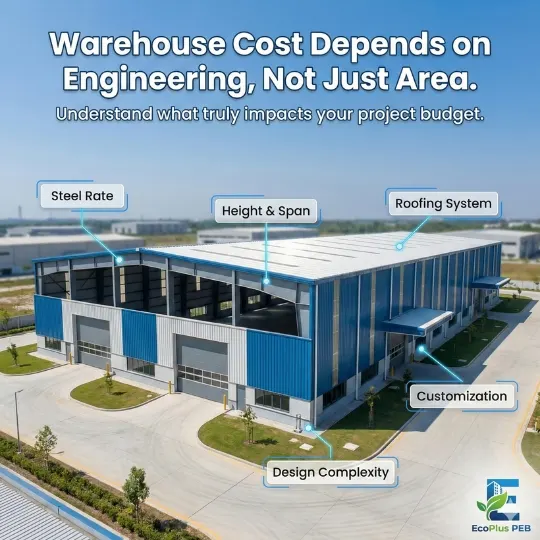
While exact pricing varies, a PEB warehouse typically depends on:
Structural steel rate
Design complexity
Height & span
Roofing system
Customization
Instead of focusing only on price per square foot, industrial buyers should evaluate:
✔ Structural efficiency
✔ Future expansion capability
✔ Maintenance cost
✔ Lifecycle durability
A professional engineering partner ensures optimized Warehouse Construction cost without compromising structural safety.
Benefits of PEB Warehouse Construction
1. Faster Construction Time
PEB warehouses can be completed 30–50% faster than RCC warehouses.
Faster construction reduces:
Project holding costs
Loan interest burden
Delayed operational revenue
2. Optimized Warehouse Construction Cost
PEB systems reduce:
Material wastage
Excess structural weight
Labor dependency
Result: Controlled and predictable Warehouse Construction cost.
3. Structural Strength & Safety
Engineered PEB warehouses are designed for:
Wind loads
Seismic zones
Heavy storage loads
4. Lower Maintenance Cost
Steel structures with protective coatings reduce corrosion and repair expenses.
5. Sustainability & ESG Compliance
PEB warehouses offer:
Recyclable steel
Reduced site pollution
Energy-efficient roofing
Why Choose Eco Plus for PEB Warehouse Construction?
Eco Plus delivers engineered warehouse solutions aligned with industrial demands.
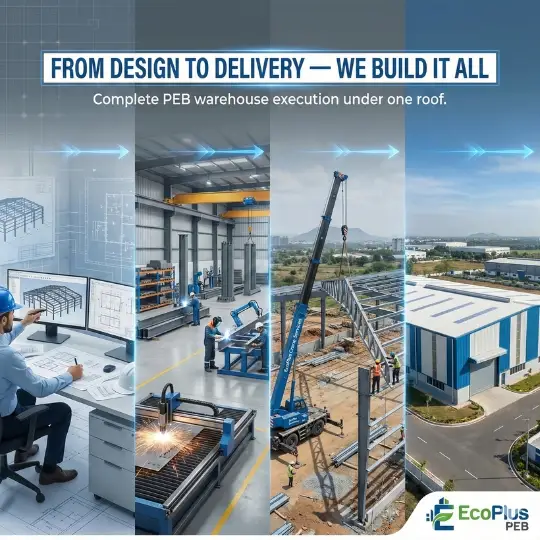
✔ End-to-End Execution
From structural design to erection.
✔ Engineering-Driven Optimization
Focus on load efficiency and minimized Warehouse Construction cost.
✔ Industrial Experience
Execution across warehouses, industrial sheds, and infrastructure projects.
✔ Timeline Commitment
Disciplined project management ensures on-time delivery.
Conclusion: Smart Warehouse Construction Is About Strategy, Not Just Cost
Warehouse construction is not just a structural project—it’s a business investment.
Choosing the right design approach directly impacts:
Operational efficiency
Scalability
Long-term profitability
A professionally engineered PEB warehouse offers:
✔ Speed
✔ Strength
✔ Cost control
✔ Future expansion flexibility
For businesses planning modern storage or logistics infrastructure, understanding and optimizing Warehouse Construction cost is the first step toward sustainable growth.