
PEB Procurement · Industrial Construction
How to Choose the Right PEB Manufacturer in India: A Practical Buyer's Guide
Choosing a PEB company is not simply a matter of comparing the lowest price per square foot.
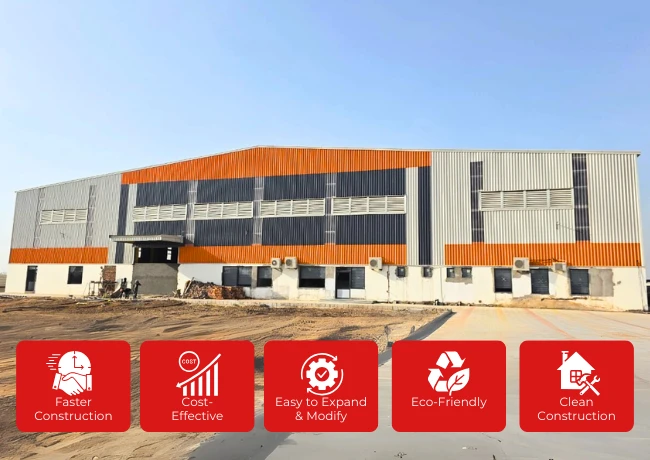
A Pre-Engineered Building may need to support machinery, cranes, storage, utilities, roofing, future expansion and day-to-day industrial operations for many years. A weak decision at the supplier-selection stage can therefore create problems much later in design, fabrication or erection.
When evaluating a PEB Manufacturer in India, buyers should look beyond brochures and headline quotations. Engineering capability, fabrication control, project experience, material specifications, site execution and commercial clarity all matter.
This guide explains what to check before awarding a PEB project.
Before you select a PEB company, check
1. Start With Your Own Project Brief
Before comparing manufacturers, define what you actually need.
Prepare basic information such as:
- Project location
- Building length and width
- Required clear height
- Intended use
- Machinery layout
- Crane requirements
- Mezzanine requirements
- Roofing and insulation needs
- Door openings
- Utility requirements
- Future expansion plans
A quotation based only on length, width and height may not reflect the real project requirement. The clearer your project brief, the easier it becomes to compare manufacturers on the same basis, and you can estimate your preliminary PEB project requirements before approaching suppliers.
2. Evaluate the Engineering Capability
A PEB project starts with engineering, not fabrication.
Ask how the company develops the structural design and what information is considered before drawings are approved. Important questions include:
Questions on the design basis
- Which design codes are being followed?
- How are wind and seismic conditions considered?
- Are crane loads included?
- Are mezzanine or suspended loads included?
- Is future expansion being considered?
- Who reviews and approves the design?
- How are design revisions controlled?
The purpose is not to demand technical calculations you cannot evaluate yourself. It is to understand whether the manufacturer has a structured engineering process behind the quotation.
3. Visit the Fabrication Facility Where Possible
A factory visit can reveal more than a sales presentation. During the visit, look at how structural components move through the fabrication process. Depending on the facility, you may review:
- Raw-material storage
- Cutting equipment
- Welding stations
- Drilling
- Purlin and secondary-member production
- Surface preparation
- Painting or coating
- Finished-component storage
- Quality inspection
- Dispatch arrangements
Also observe whether materials and fabricated members are properly identified and organised. The objective is to understand whether the company has control over fabrication rather than relying only on promises about production capacity. Details of the ECO Plus manufacturing facilities are published on the company's facilities page.
4. Review Similar Completed Projects
A long project list is less useful than relevant project experience.
Ask whether the manufacturer has completed buildings similar to yours in terms of application, span, height, crane requirement, building complexity, location and industrial use.
For example, experience with warehouses does not automatically demonstrate experience with a heavy manufacturing facility requiring multiple EOT cranes.
Where appropriate, ask for project photographs, client name, location, scope of work, building type and a reference contact. Real project evidence helps you evaluate whether the company has handled requirements comparable to your own.
A Real ECO Plus Industrial PEB Project
Client: Coca-Cola Limited · Location: Bhuvneshwar, Odisha · Scope: Industrial Pre Engineered Building
Published project records for this facility cover the client, location and scope of work. Building area, tonnage, crane capacity and completion period are not stated here.
5. Check Material and Quality Documentation
Do not assume that every quotation uses identical material specifications. Ask for clarity regarding:
- Primary structural steel
- Secondary members
- Roofing sheets
- Wall cladding
- Fasteners
- Insulation
- Paint or protective coating
- Gutters and flashings
You should also understand what quality-control documentation is available during fabrication. Depending on the project and scope, this may include inspection records, material documentation or other project-specific quality checks. ECO Plus publishes its quality and inspection practices for reference.
The objective is not simply to collect paperwork. It is to make sure the material being supplied matches the agreed specification.
6. Compare BOQs, Not Just Final Prices
Two PEB quotations can look similar while covering very different scopes.
Before comparing totals, check what each quotation actually includes. A simple line-by-line comparison is usually enough to expose the difference.
| Item | Supplier A | Supplier B |
|---|---|---|
| Structural design | ||
| Primary steel | ||
| Secondary steel | ||
| Roofing | ||
| Wall cladding | ||
| Insulation | ||
| Gutters / downpipes | ||
| Ventilators / skylights | ||
| Transportation | ||
| Erection | ||
| Lifting / crane at site | ||
| Painting / coating | ||
| Doors / openings | ||
| Taxes |
A lower quotation may simply exclude work that another supplier has included. Always compare equivalent technical and commercial scopes.
7. Understand What Happens When the Design Changes
Industrial projects often change during coordination. A machine may move. A door may become larger. Crane requirements may change. The client may request an additional bay.
Ask the manufacturer when the design is considered frozen, how revisions are approved, whether changes can be made after fabrication begins, how additional costs are calculated and whether design changes can affect delivery.
Late changes may affect engineering, materials, fabrication and the project schedule, so the change-control process should be understood before the order is placed. This can prevent disputes later.
8. Evaluate Erection Capability
Good fabrication alone does not guarantee good site execution.
Understand who will erect the building, and ask:
- Is erection handled directly or subcontracted?
- Who supervises the erection team?
- What lifting equipment will be required?
- What site conditions must be ready before erection starts?
- Who checks anchor-bolt alignment?
- How are roofing and cladding installations inspected?
- What safety arrangements are expected?
The interface between foundations, anchor bolts and structural steel deserves particular attention because errors here can affect erection even if the fabricated components are correct.
9. Review the Project Schedule Realistically
Do not select a supplier only because it offers the shortest promised completion time. Ask for the schedule by stage.
- Requirement finalisation
- Engineering
- Drawing approval
- Material procurement
- Fabrication
- Dispatch
- Erection
- Roofing and cladding
- Final completion
Also ask what the client must provide before each stage can begin. Project duration may depend on approvals, civil readiness, site access, logistics, weather and design changes. A realistic schedule is more useful than an aggressive completion promise with unclear assumptions.
10. Check Current Capacity, Not Only Installed Capacity
A company may have a large fabrication facility but still be handling several major projects at the same time. Ask about the current production workload, when fabrication can actually begin, whether material is already available, how your project will be scheduled and whether the proposed delivery period is based on current capacity.
This gives a more realistic picture than relying only on an annual production-capacity figure.
11. Understand Transportation and Site Logistics
PEB components must eventually reach the site and be handled safely. Before awarding the project, clarify:
- Who arranges transportation?
- Is freight included?
- How will long structural members be transported?
- Is suitable road access available?
- Who unloads the material?
- Where will components be stored?
- What crane access is required?
Poor logistics can delay an otherwise well-planned project. Site access should therefore be considered early, particularly for remote or congested project locations.
12. Ask About Future Expansion
If the facility may expand later, discuss it before the first phase is designed. Future growth could require additional bays, new production lines, extra storage, additional cranes or more utility capacity.
The initial design and site plan may need to consider the likely expansion direction, end-wall arrangement, roads, drainage and utility routes. A manufacturer should not simply say that PEB buildings are expandable. Ask how expansion is being considered in your specific project.
13. Speak With Previous Clients
References can provide useful information that brochures cannot. When possible, ask previous clients about drawing coordination, communication, fabrication quality, delivery, site execution, changes during the project, response to problems and final handover.
You do not need dozens of references. A few relevant projects similar to your requirement can be more useful than a long list of unrelated clients — a review of completed PEB projects is a practical starting point.
14. Read Exclusions Before Signing
One of the most important parts of a quotation is often the section buyers read last: exclusions.
Before issuing the order, confirm responsibility for:
- Foundations
- Flooring
- Anchor bolts
- Transportation
- Unloading
- Site cranes
- Electrical work
- Fire systems
- Doors
- Drainage
- Civil works
- Insulation
- Approvals
- Taxes
- Accommodation for erection teams
The objective is to remove ambiguity before the project starts.
A Simple PEB Manufacturer Evaluation Checklist
| Evaluation area | Score |
|---|---|
| Engineering capability | /10 |
| Similar project experience | /10 |
| Fabrication infrastructure | /10 |
| Quality documentation | /10 |
| Technical quotation clarity | /10 |
| Commercial transparency | /10 |
| Erection capability | /10 |
| Delivery planning | /10 |
| Client references | /10 |
| Communication & coordination | /10 |
Do not automatically award the project to the company with the highest score. Use the checklist to structure your technical and commercial discussion.
Choose Clarity Over the Lowest Headline Price
Choosing the right PEB manufacturer is ultimately about reducing uncertainty before construction begins.
A strong proposal should explain what is being designed, what materials are being supplied, what is included in the price, how fabrication will be controlled, how erection will be managed and what responsibilities remain with the client.
The lowest initial quotation is not necessarily the best project decision. For industrial buildings, the better choice is usually the manufacturer whose engineering, fabrication, execution and commercial scope align most clearly with the actual project requirements.
Before placing an order, define your requirements carefully, compare equivalent scopes and ask enough questions to understand exactly what will be delivered.
Frequently asked questions
What information should I provide before asking for a PEB quotation?
Provide the project location, proposed dimensions, intended building use, required height, crane requirements, mezzanine requirements, roofing specification, major openings and future expansion requirements.
Should I visit a PEB fabrication plant before awarding the project?
For a significant industrial project, a factory visit can help you understand fabrication infrastructure, material handling, quality control and current production activity.
How should I compare two PEB quotations?
Compare the technical specification, included materials, transportation, erection, roofing, accessories, exclusions and responsibilities — not only the final amount.
Should crane requirements be finalized before PEB design?
Crane requirements should ideally be identified early because crane capacity, span and operating requirements can influence structural design.
Is the lowest-priced PEB manufacturer always the best option?
Not necessarily. Different quotations may contain different material specifications, scopes and exclusions. Compare equivalent requirements before evaluating price.
Planning a PEB Project?
Prepare your project location, dimensions, building application, crane requirements and major structural needs before requesting a technical proposal.