Renewable Energy · Industrial Infrastructure
Industrial Infrastructure for India's Renewable Energy Expansion: The Role of PEB Buildings
Clean-energy growth is usually measured in gigawatts. Behind every megawatt sits a supply chain of factories, warehouses and steel structures that make manufacturing, storage and installation possible.
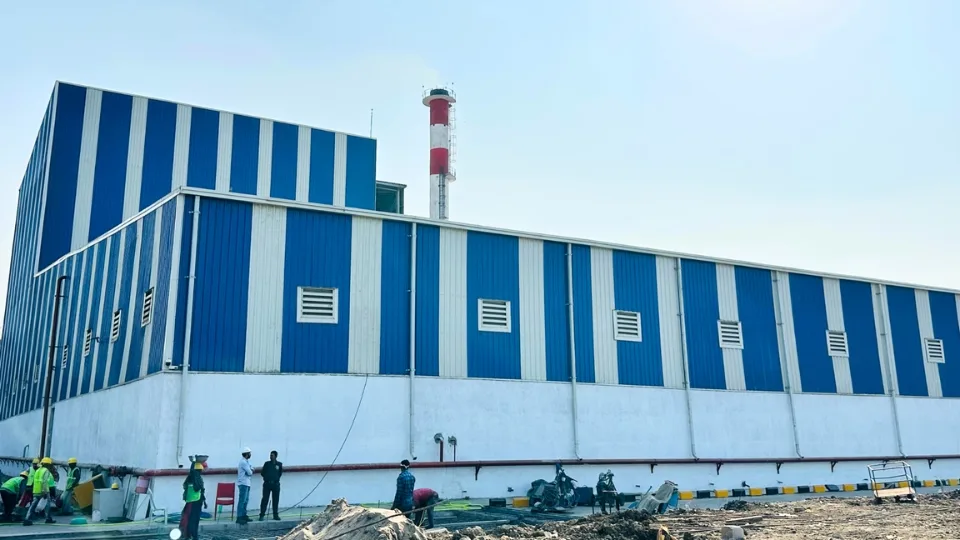
India's renewable-energy story is usually told through solar parks, wind farms and rising capacity figures. That version leaves out a quieter but essential part: the buildings that make it all work. Every panel is manufactured somewhere, every inverter is stored somewhere, and every battery module is assembled and tested inside a building designed for the job.
That supporting layer — factories, Pre-Engineered Buildings, warehouses, workshops, utility structures and logistics facilities — is what turns clean-energy ambition into installed capacity. Understanding renewable energy infrastructure in India therefore means looking past the generating assets and into the industrial construction that feeds them.
Why does renewable energy need industrial infrastructure?
Renewable-energy equipment moves through manufacturing, testing, storage, transport, installation and maintenance — and almost every stage happens inside an industrial building.
A solar module is produced on a line, checked, packed and warehoused before it ever reaches a rooftop or a park. Wind and electrical components need fabrication and handling space. Battery systems demand purpose-built production and storage. Each step depends on a physical facility engineered for that use.
The supporting ecosystem typically includes solar PV manufacturing plants, component factories, industrial warehouses and godowns, maintenance workshops, utility and control buildings, battery facilities, covered equipment storage and dispatch areas. India's push for domestic manufacturing — backed by the MNRE Production Linked Incentive scheme for solar modules — ties clean-energy targets directly to industrial construction in India.
How do PEB buildings support renewable-energy projects?
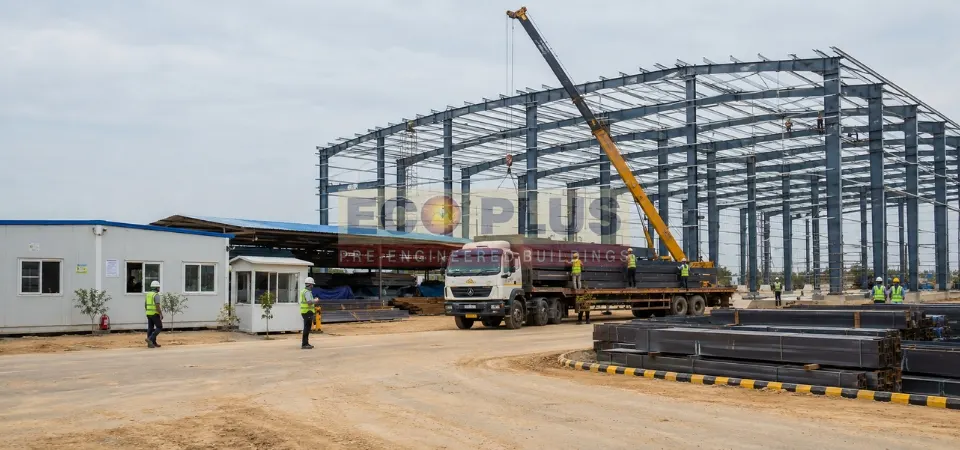
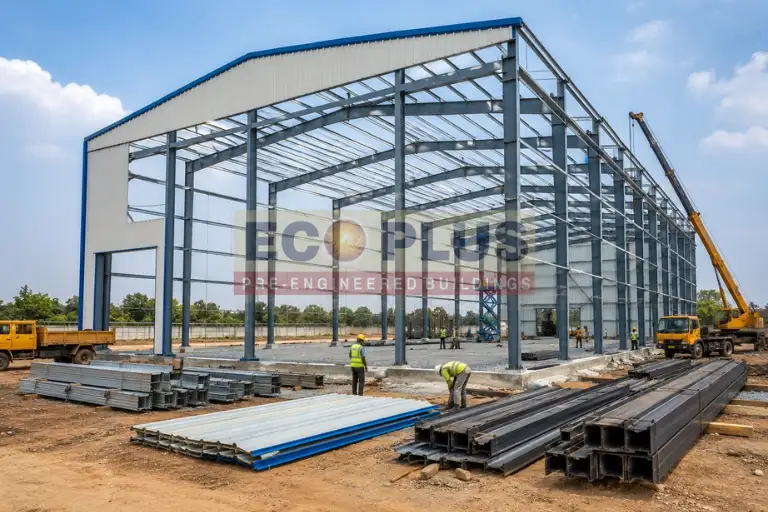
PEB systems suit renewable-energy work because structural components are engineered and fabricated off-site, then assembled to a layout planned around the process rather than a generic shed.
Pre-Engineered Buildings serve several distinct roles across a clean-energy campus:
Manufacturing plants
Production buildings can be shaped around machinery, assembly lines, equipment movement and utility routes — so the structure follows the manufacturing flow instead of forcing operations into a fixed box.
Warehouses
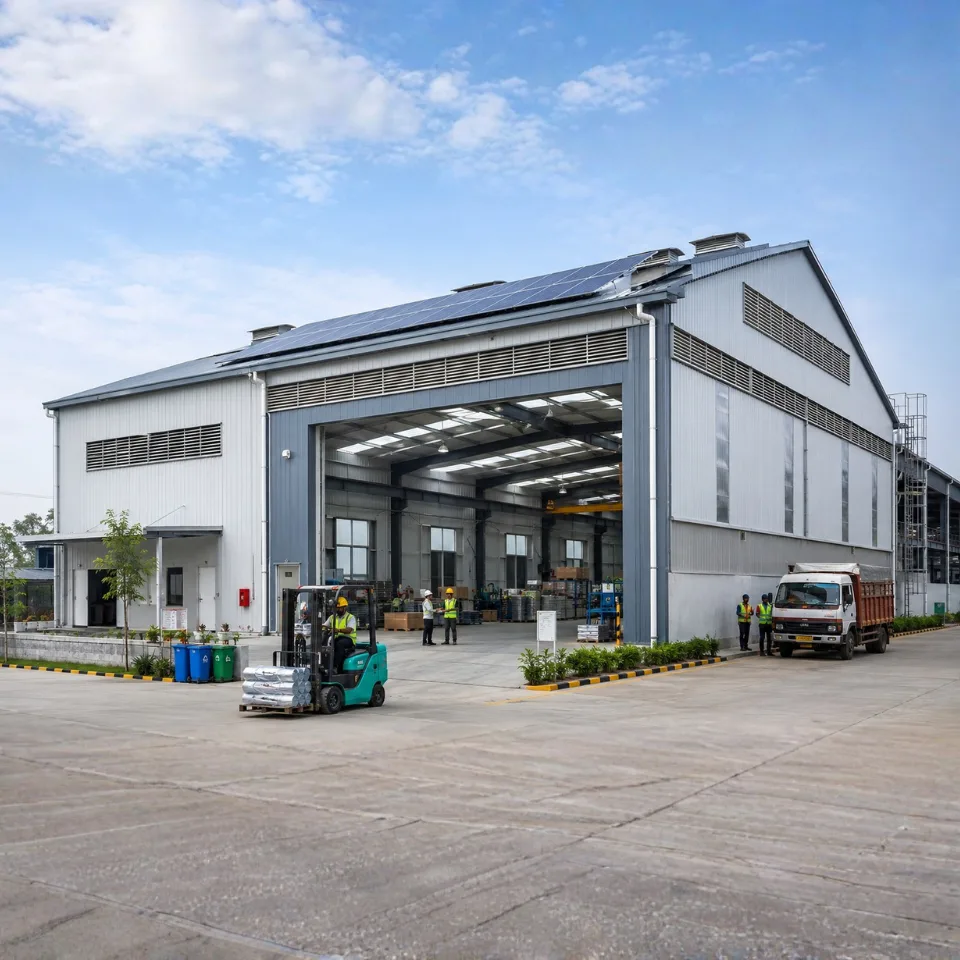
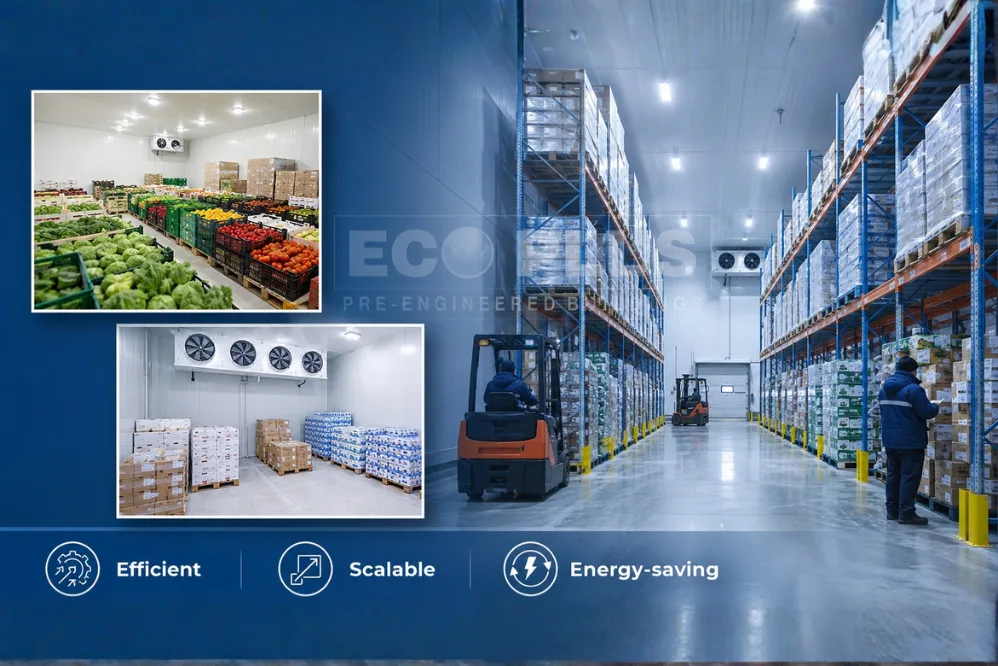
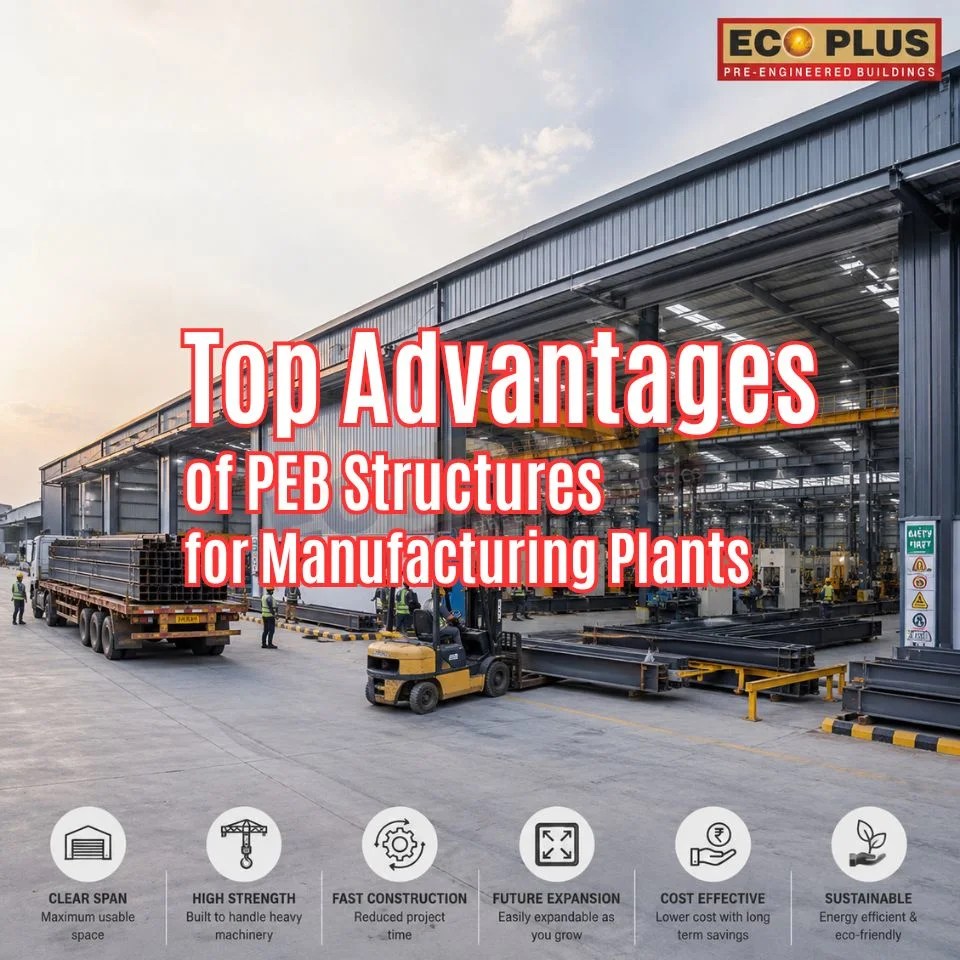
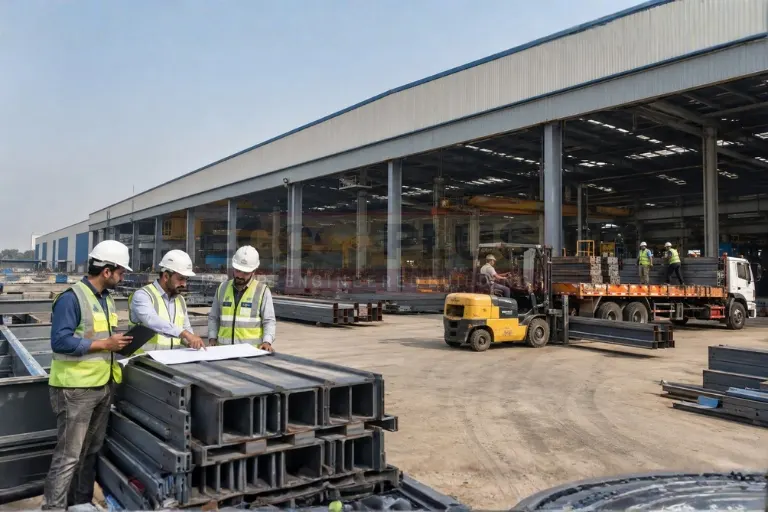
A PEB warehouse gives large clear-span areas for solar modules, electrical components, raw materials, fabricated steel, spare parts and finished goods, with room for racking and forklift movement.
Workshops and maintenance buildings
High-clearance steel buildings handle fabrication, maintenance and material-handling equipment, with the working heights that industrial operations need.
Utility buildings
Smaller steel structures support electrical systems, plant utilities, engineering teams and other secondary operations across the site.
What infrastructure does solar manufacturing require?
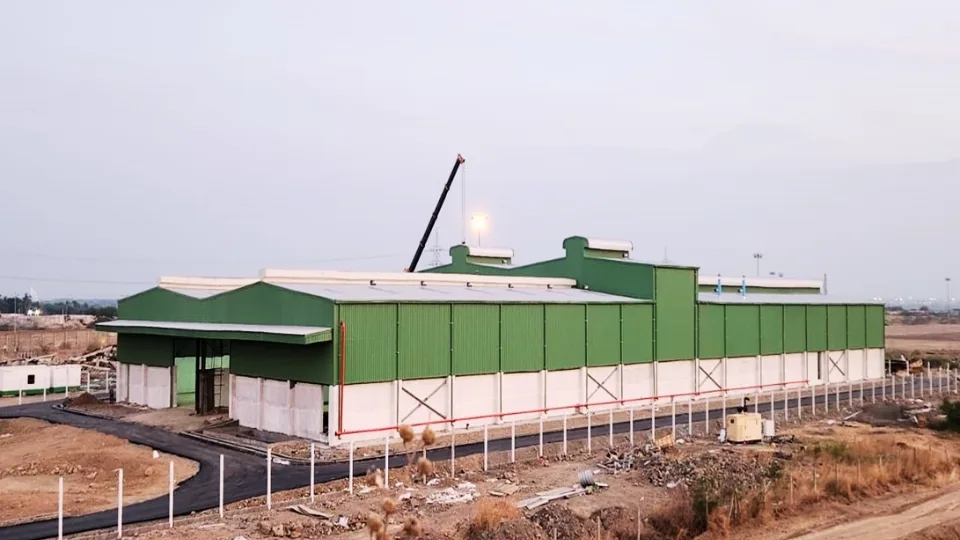
A solar manufacturing campus usually needs a production building, raw-material and finished-goods warehouses, utilities, administration and loading facilities — not just a factory floor.
Solar leads India's installed capacity, and its expansion drives demand for supply-chain infrastructure, not only solar farms. The layout of a Prefabricated Factory Building should account for production flow, machinery positioning, clear height, structural loads, material movement, ventilation, dispatch and future expansion.
Planned well, the building follows the process. A production line can grow, a bay can be added, and a second phase can be anticipated in the original structural and site design rather than retrofitted later.
Why are warehouses important to renewable energy?
Warehouses protect equipment and keep inventory, logistics and dispatch organised — components often arrive weeks before installation and cannot sit exposed on site.
A renewable-energy warehouse should be designed around real operations: racking, forklift circulation, floor loading, truck movement, door placement and future storage capacity. For larger facilities, a Pre-Engineered Warehouse can provide flexible clear-span areas and planned room to expand as project volumes rise.
Battery and energy-storage infrastructure
Battery projects may need manufacturing buildings, assembly and testing zones, utility spaces and specialised storage — and they should never be treated as ordinary warehouses.
As renewable penetration grows, energy storage becomes central to grid stability. Battery-related facilities carry requirements that a standard shed does not address. Fire engineering, ventilation, electrical design, equipment layout and applicable safety regulations must be coordinated with specialist consultants for every project.
PEB structures can form part of such developments where they suit the engineering and safety brief — but the safety systems, not the shell, define the building.
What infrastructure is needed for green hydrogen?
India's green-hydrogen push can create demand for equipment-manufacturing plants, electrolyser facilities, warehouses, workshops, control buildings, utility structures and logistics infrastructure.
The National Green Hydrogen Mission aims to develop the country as a major centre for green-hydrogen production, use and export, with support for electrolyser manufacturing. MNRE also identifies pipelines, tankers, intermediate storage and distribution as part of the hydrogen supply chain. As with battery work, safety-critical elements need specialist engineering rather than off-the-shelf assumptions.
Why PEB systems fit fast-growing industries
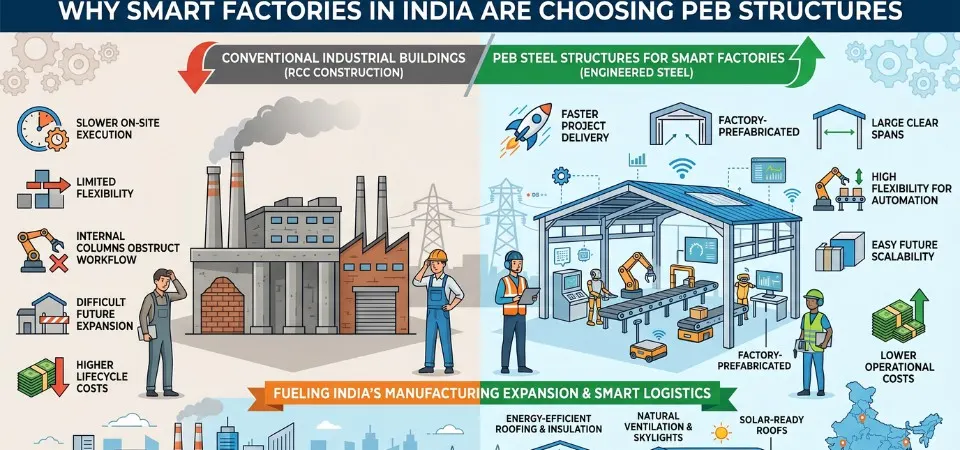
Renewable-energy industries change quickly — lines expand, warehouses add bays, campuses enter a second phase. PEB construction supports that through engineered layouts, large usable areas and the ability to plan future expansion at the design stage. Controlled off-site fabrication, reduced on-site structural work and compatibility with cranes, mezzanines and ventilation systems add to its practical appeal, and this suits the work of Industrial Shed Manufacturers serving the sector.
That said, PEB is not automatically the right answer for every project. The correct structural system depends on loads, site conditions, fire requirements, building use, equipment and lifecycle expectations. Multi-level facilities — for administration or process needs — may point toward Prefab Multi-Storey Buildings instead.
Sustainable industrial infrastructure
A clean-energy facility should reflect the efficiency of the energy it supports. Industrial buildings can incorporate natural daylight, effective ventilation, thermal insulation, rooftop solar provisions, rainwater management, recyclable steel and efficient structural design.
Steel alone does not make a building sustainable. Real efficiency starts with a design that uses materials, energy and space carefully across the building's life — solar panels on the roof are the finish, not the foundation.
How ECO Plus supports renewable-energy infrastructure
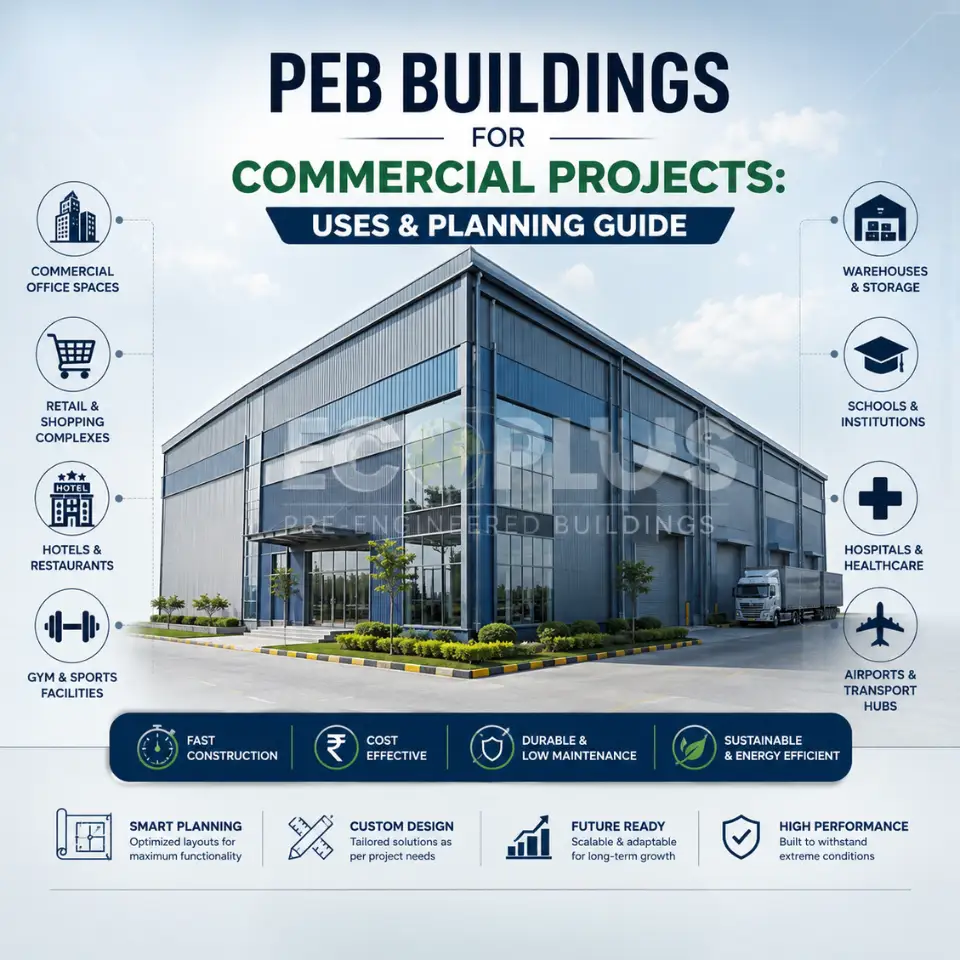
ECO Plus develops industrial steel infrastructure — Pre-Engineered Buildings, prefabricated factory buildings, Pre-Engineered Warehouses, industrial sheds and multi-storey steel structures. For renewable-energy manufacturers and their supporting industries, the aim is not a bare shell but a building that responds to how it will actually be used.
A successful industrial building has to account for manufacturing workflow, machinery, structural load, storage, material movement, utilities, crane integration and future expansion. Early coordination between the client, the process team and structural engineers is what produces infrastructure that keeps performing long after handover.
Conclusion
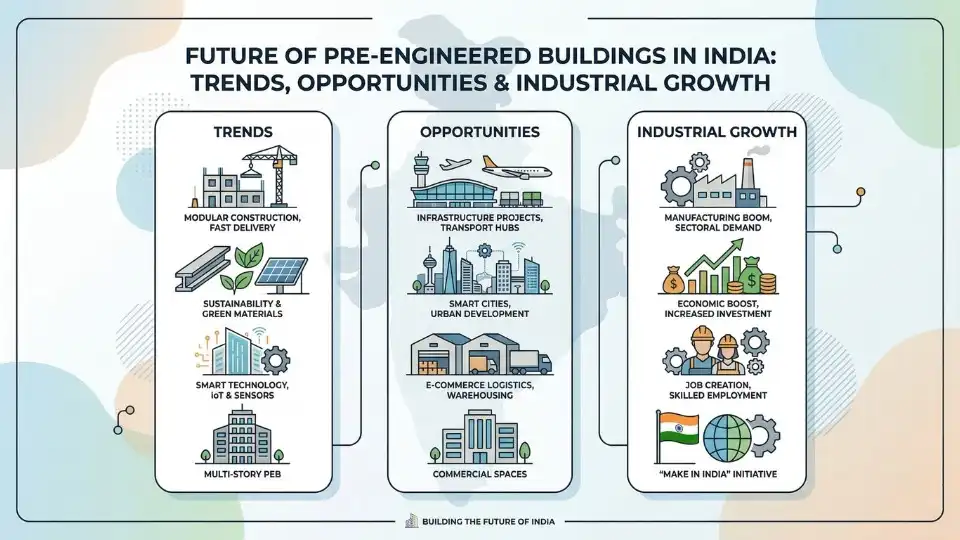
India's renewable-energy expansion is creating a parallel demand for factories, warehouses, PEB buildings, industrial sheds, utility structures and logistics infrastructure. As solar manufacturing, energy storage and green hydrogen mature, industrial infrastructure becomes an increasingly important link in the clean-energy supply chain.
For businesses entering or scaling within the sector, the strongest facilities are the ones designed around the operational process — not simply around available floor area.
Planning an industrial building, PEB factory, warehouse or steel infrastructure project? Speak with ECO Plus about your project requirements.
Frequently asked questions
What is renewable energy infrastructure?
It covers the generation assets plus the supporting industrial facilities that make clean energy possible — factories, warehouses, utility buildings, workshops, equipment storage and logistics infrastructure across the supply chain.
Why are PEB buildings suitable for renewable-energy projects?
Pre-Engineered Buildings offer engineered steel construction, flexible clear-span layouts and efficient industrial space. Components are fabricated off-site and assembled to a plan built around the process, which suits fast-moving renewable-energy operations.
Can PEB buildings be used for solar manufacturing?
Yes, where the structural system suits the production process and engineering requirements. The layout should follow machinery positioning, clear height, structural loads, material movement and dispatch rather than a generic shed footprint.
What infrastructure does a solar factory require?
A typical solar campus needs a production building, raw-material and finished-goods warehouses, utilities, administration areas, testing space and loading facilities — all planned around production flow and future expansion.
Why are warehouses important in renewable energy?
Equipment often arrives weeks before installation and must be protected from weather and damage. Warehouses keep inventory organised and support logistics, racking, forklift movement and dispatch across a project.
What buildings are required for battery projects?
Battery projects may need manufacturing buildings, assembly and testing zones, utility spaces and specialised storage. These require project-specific fire, ventilation, electrical and safety engineering — not a standard warehouse.
What infrastructure is needed for green hydrogen?
The hydrogen ecosystem can require equipment-manufacturing plants, electrolyser facilities, warehouses, workshops, control buildings, utilities, maintenance and logistics infrastructure, including storage and distribution.
Can PEB buildings be expanded later?
Yes. Future expansion can be planned into the original structural and site design, making later capacity additions easier and reducing operational disruption when a line or warehouse needs to grow.
Can rooftop solar be installed on PEB buildings?
Yes, provided the additional loads are considered in the structural design. Solar-ready roofs are best planned at the design stage rather than added as an afterthought.
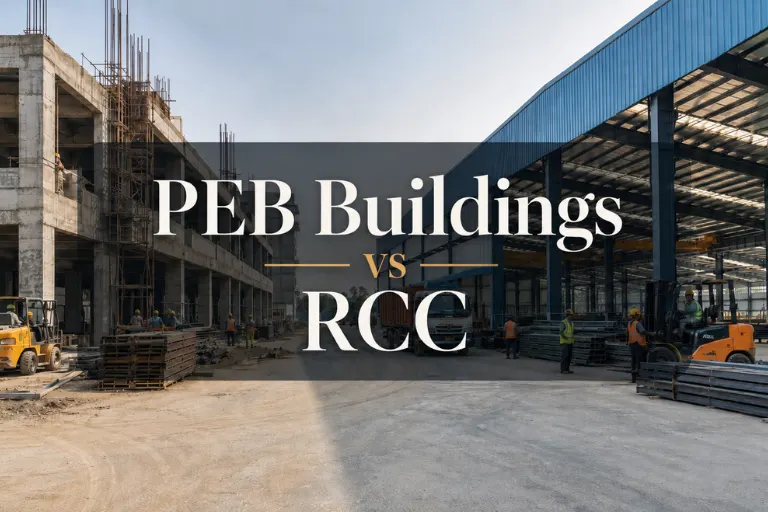
Is PEB always better than RCC?
No. The right solution depends on project-specific structural and operational requirements — loads, site conditions, fire needs, building use, equipment and lifecycle expectations all influence the choice.