Introduction: Why Choosing the Right Construction Method Matters
Industrial construction decisions influence far more than the physical structure of a facility. They directly impact project timelines, operational efficiency, scalability, and long-term maintenance costs. For factory owners, warehouse developers, infrastructure planners, and EPC contractors, choosing the right building system is a strategic business decision.
Two of the most common construction approaches used for industrial buildings today are Pre-Engineered Building (PEB) systems and Reinforced Cement Concrete (RCC) structures. Each method has its own advantages and limitations depending on project requirements.
However, with modern industries prioritizing speed, cost efficiency, and flexible design, the discussion around PEB vs RCC Construction has become increasingly important. Many industrial developers now evaluate both systems carefully before selecting the best solution.
In this detailed guide, we will explain the difference between PEB vs RCC Construction, explore their design characteristics, compare costs and timelines, and help industrial decision-makers determine which option works best for their projects.
The insights in this guide are aligned with real-world industrial building practices followed by experienced engineering companies such as Eco Plus, which delivers large-scale steel and infrastructure projects across multiple sectors.
What Is PEB Construction?
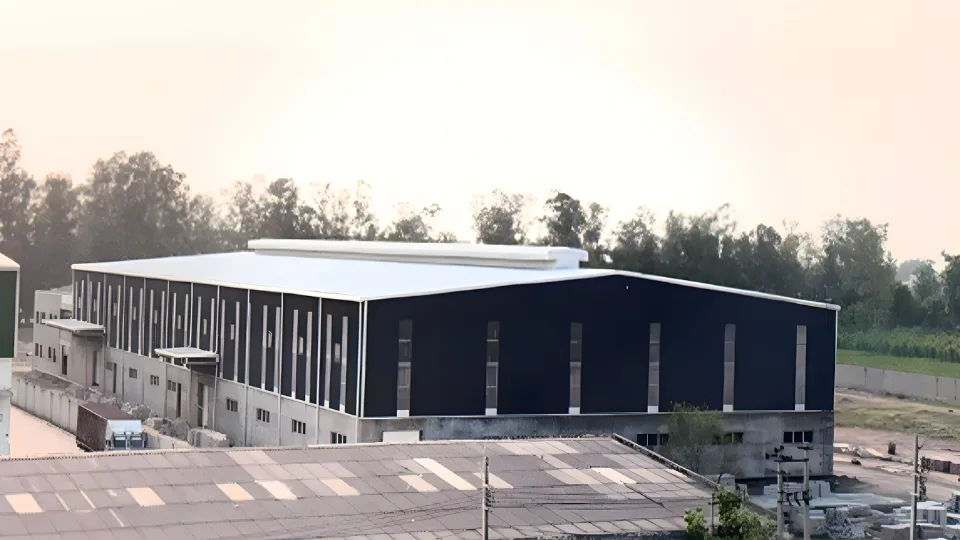
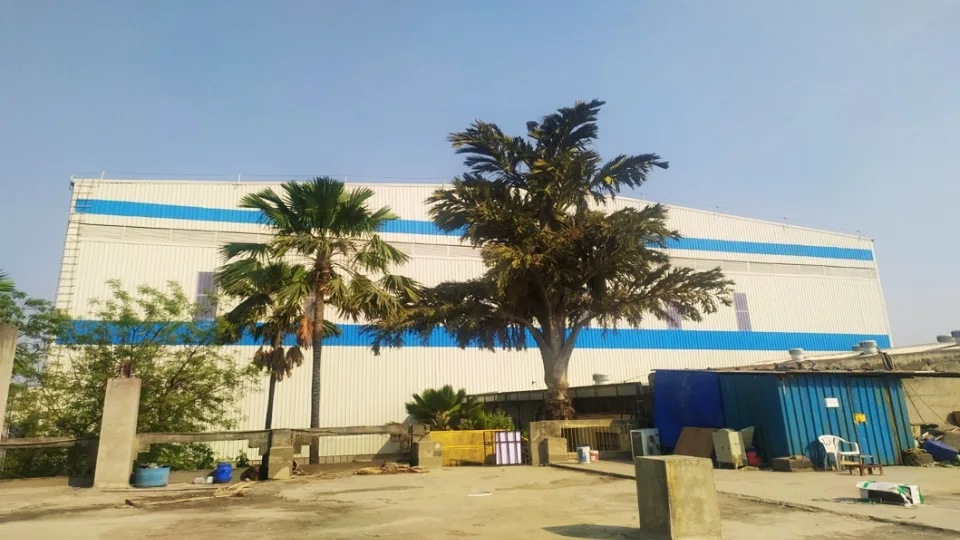
Pre-Engineered Building (PEB) construction refers to a structural system in which building components are engineered, designed, and fabricated in a factory before being assembled at the project site.
Unlike traditional construction, where most work happens on-site, a PEB project follows a design-first approach. Engineers analyze loads, structural spans, wind conditions, and operational requirements before fabricating steel components.
A typical PEB structure includes:
Steel columns and rafters
Purlins and girts
Roof and wall cladding
Bracing systems
Ventilation systems and skylights
Because these components are produced in controlled manufacturing environments, PEB construction offers higher precision, faster installation, and optimized steel usage.
This is one reason why discussions around PEB vs RCC Construction often highlight speed and efficiency advantages.
What Is RCC Construction?
Reinforced Cement Concrete (RCC) construction is one of the oldest and most widely used construction methods. It involves the combination of concrete and steel reinforcement bars to create strong structural components.
In RCC buildings, the following elements are constructed directly on site:
Foundations
Columns
Beams
Slabs
Structural frames
Concrete is poured into molds or shuttering systems and reinforced with steel bars to provide tensile strength. Once cured, the structure becomes rigid and durable.
RCC construction has traditionally been used for:
Residential buildings
Commercial complexes
Institutional structures
High-rise buildings
However, when comparing PEB vs RCC Construction for industrial buildings, the limitations of RCC structures—such as construction speed and flexibility—often become evident.
Understanding the Core Difference: PEB vs RCC Construction
The comparison between PEB vs RCC Construction primarily revolves around three factors:
Construction speed
Structural efficiency
Operational flexibility
RCC buildings rely heavily on site-based work processes, which means construction speed is influenced by labor availability, weather conditions, and curing time.
PEB structures, on the other hand, transfer most of the construction activity to controlled factory environments, allowing faster assembly and fewer site-related delays.
Key Components of PEB and RCC Structures
Components in a PEB Building
PEB structures use a modular steel system consisting of:
Primary framing (columns and rafters)
Secondary framing (purlins and girts)
Bracing systems
Roofing and cladding panels
These components are engineered to minimize weight while maintaining structural strength.
Components in RCC Construction
RCC buildings include:
Concrete columns
Reinforced beams
Slabs and floors
Brick or block walls
The structure depends heavily on the mass and rigidity of concrete.
Understanding these components is important when evaluating PEB vs RCC Construction for industrial applications.
PEB vs RCC Construction: Detailed Comparison
1. Construction Speed
One of the biggest differences between PEB vs RCC Construction is the project timeline.
RCC structures require:
Shuttering installation
Steel reinforcement placement
Concrete pouring
Curing time
Each step adds to the overall construction duration.
PEB structures, however, are fabricated off-site and delivered ready for installation. Once the foundation is complete, the steel frame can be erected quickly.
For industrial projects that require rapid commissioning, PEB construction significantly reduces project timelines.
2. Cost Efficiency
When analyzing PEB vs RCC Construction, cost is an important factor for business owners.
While RCC may sometimes appear cost-effective initially, it often results in higher expenses due to:
Longer construction time
Higher labor costs
Material wastage
PEB construction optimizes steel usage through engineering design, which helps control overall project costs.
Additionally, faster project completion leads to earlier operational start and quicker return on investment.
3. Structural Weight
RCC buildings are heavy due to the use of concrete. This increases foundation requirements and material consumption.
PEB buildings are comparatively lightweight because the steel components are designed using advanced engineering calculations.
Lower structural weight reduces foundation cost, making PEB vs RCC Construction comparisons often favor steel systems for large-span buildings.
4. Span Capability
Industrial buildings often require large column-free spaces for machinery, storage, and logistics operations.
RCC structures typically require multiple columns to support the slab, which can restrict movement and reduce usable floor area.
PEB structures are capable of creating large clear spans, making them ideal for:
Warehouses
Manufacturing plants
Aircraft hangars
Logistics hubs
5. Flexibility and Expansion
Another major difference in PEB vs RCC Construction is expansion capability.
Industrial businesses frequently expand their operations. PEB structures can easily be extended by adding new bays.
RCC structures, however, require complex structural modifications for expansion.
This makes PEB construction more adaptable to future growth.
Applications of PEB vs RCC Construction
Applications of PEB Structures
PEB systems are widely used for:
Industrial sheds
Warehouses and logistics hubs
Manufacturing plants
Infrastructure support buildings
Aircraft hangars
Cold storage facilities
Applications of RCC Construction
RCC remains suitable for:
Residential buildings
High-rise commercial buildings
Institutional structures
Apartment complexes
Therefore, when comparing PEB vs RCC Construction, the best choice depends largely on the building purpose.
Maintenance and Lifecycle Cost
Maintenance plays an important role when evaluating PEB vs RCC Construction.
RCC structures may require periodic repairs due to:
Concrete cracks
Structural aging
Water seepage
PEB structures, when properly coated and maintained, offer excellent durability with minimal maintenance.
Modern steel coatings also improve corrosion resistance, increasing the building’s lifespan.
Sustainability and Environmental Impact
Sustainability is another growing consideration in the PEB vs RCC Construction debate.
PEB construction offers several environmental benefits:
Reduced material wastage
Recyclable steel components
Lower construction site pollution
Energy-efficient roofing options
These features make PEB structures a preferred choice for environmentally conscious industrial developers.
Why Industries Are Moving Toward PEB Structures
Industrial development today focuses on:
Faster project completion
Cost efficiency
Flexible layouts
Scalable infrastructure
Because of these priorities, many industries now favor PEB solutions when comparing PEB vs RCC Construction.
The demand for PEB structures continues to rise across sectors such as manufacturing, logistics, and infrastructure.
Choosing the Right Construction Partner
Selecting the right construction system is only one part of the decision. The expertise of the engineering company also plays a crucial role.
Companies like Eco Plus specialize in delivering engineered steel structures tailored for industrial and infrastructure applications.
With a focus on structural optimization and project execution, such companies help businesses achieve efficient results when implementing modern building systems.
Frequently Asked Questions (AEO Optimized)
What is the main difference between PEB vs RCC Construction?
The main difference lies in the structural system. PEB uses factory-fabricated steel components, while RCC relies on reinforced concrete structures built on site.
Which construction method is faster: PEB or RCC?
PEB construction is significantly faster because structural components are manufactured off-site and assembled quickly.
Is PEB cheaper than RCC?
In many industrial projects, PEB construction results in lower overall lifecycle costs due to faster completion and optimized material usage.
Can PEB buildings handle heavy industrial loads?
Yes. Properly engineered PEB structures are designed to support cranes, machinery, and industrial loads.
Future of Industrial Construction
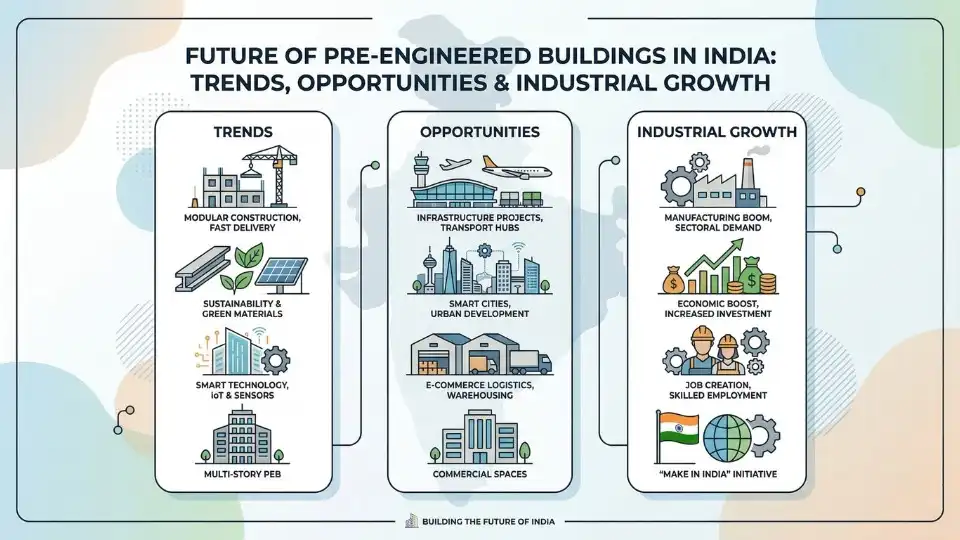
Industrial infrastructure in India is evolving rapidly due to:
Manufacturing expansion
E-commerce growth
Logistics modernization
Government infrastructure initiatives
As industries demand faster and more efficient construction methods, the debate around PEB vs RCC Construction will continue to grow.
Experts expect steel-based building systems to play an increasingly important role in industrial development.
Conclusion: PEB vs RCC Construction – Which One Should You Choose?
The decision between PEB vs RCC Construction ultimately depends on the type of building and project requirements.
For residential and high-rise structures, RCC continues to be a reliable solution. However, for industrial facilities such as warehouses, factories, and large-span buildings, PEB structures offer several advantages.
These include:
Faster construction
Lower structural weight
Flexible design
Easy expansion
Cost optimization
For businesses planning industrial infrastructure, understanding the differences between PEB vs RCC Construction helps ensure smarter investment decisions and more efficient project execution.