
What Is a Pre Engineered Building (PEB)? Complete Beginner’s Guide
Introduction: Why Everyone Is Talking About Pre Engineered Building
India is building faster than ever before. From manufacturing plants and warehouses to logistics hubs, infrastructure facilities, and industrial parks, the pressure to build quickly, cost-effectively, and reliably has never been higher.
Traditional construction methods—especially RCC—are struggling to keep up with this pace. This is exactly where the Pre-Engineered Building (PEB) has emerged as a game-changer.
If you are a factory owner, warehouse developer, infrastructure planner, EPC contractor, or business decision-maker, understanding what a Pre Engineered Building (PEB) is and how it works is no longer optional—it’s essential.
This beginner-friendly guide explains everything you need to know about Pre-Engineered Buildings (PEB) in simple, practical language—without technical jargon overload.
What Is a Pre-Engineered Buildin (PEB)?
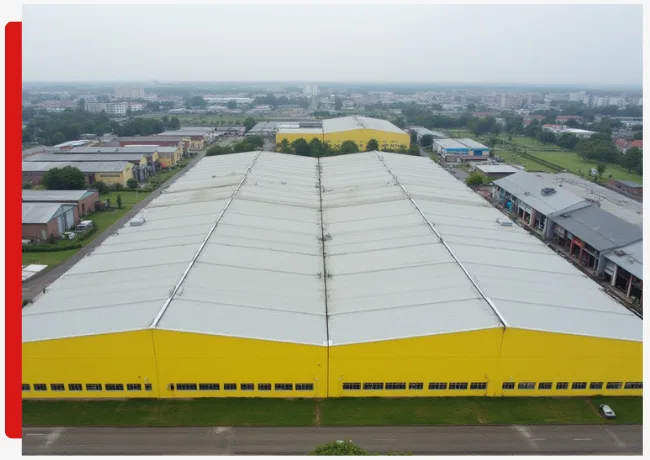
A Pre-Engineered Building (PEB) is a steel structure that is designed, engineered, fabricated, and manufactured in a factory, then transported to the project site for assembly and erection.
Unlike conventional construction where materials are cut, shaped, and adjusted on-site, a Pre-Engineered Building (PEB) follows a system-based approach. Every component—columns, rafters, purlins, bracings, roofing, and cladding—is engineered to work together as one optimized structure.
In simple terms:
A Pre-Engineered Building (PEB) is a ready-to-assemble industrial building designed for speed, strength, and efficiency.
Why Pre-Engineered Building (PEB) Were Introduced
Before PEB technology, most industrial buildings in India were constructed using:
RCC structures
Conventional steel trusses
Brick-and-mortar systems
These methods worked—but they came with limitations:
Long construction timelines
High labor dependency
Material wastage
Difficult future expansion
Inconsistent quality
The Pre-Engineered Building (PEB) concept was introduced to solve these problems by shifting critical construction activities from the site to a controlled factory environment.
How a Pre-Engineered Building (PEB) Is Different from Conventional Construction?
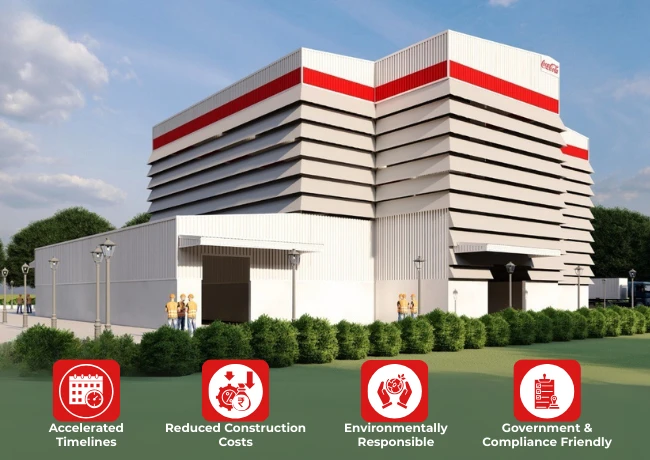
Choosing Prefab Multi-Storey Buildings offers several strategic advantages over traditional construction methods—especially for fast-paced industries, institutional setups, and cost-conscious developers.
Traditional Construction (RCC / Conventional Steel)
Design and construction happen simultaneously
Heavy dependence on site labor
Over-designed structures increase cost
Weather delays are common
Expansion is complex
Pre-Engineered Building (PEB)
Complete design finalized before fabrication
Factory-controlled manufacturing
Optimized steel usage
Faster erection
Easy future expansion
This difference is why Pre Engineered Building (PEB) are now preferred for industrial and infrastructure projects.
Key Components of a Pre Engineered Building (PEB)
To understand how a Pre-Engineered Building (PEB) works, let’s break it down into its core components.
1. Primary Structural Frame
This includes:
Columns
Rafters
They carry the main load of the building and are custom-designed based on span, height, wind load, seismic zone, and crane requirements.
2. Secondary Structural Members
These include:
Purlins (roof support)
Girts (wall support)
Bracings
They provide stability and distribute loads efficiently across the structure.
3. Roofing and Wall Cladding
Common options include:
Color-coated steel sheets
Insulated sandwich panels
Standing seam roofing
These systems enhance durability, thermal comfort, and aesthetics.
4. Accessories and Add-Ons
A Pre-Engineered Building (PEB) can include:
Skylights
Ventilators
Ridge monitors
Louvers
Mezzanine floors
Crane systems
Step-by-Step Process of a Pre-Engineered Building (PEB)
To understand how a Pre-Engineered Building (PEB) works, let’s break it down into its core components.
Step 1: Requirement Analysis
The process starts by understanding:
Building usage
Span and height
Load requirements
Future expansion plans
Step 2: Structural Design & Engineering
Advanced design software is used to engineer every component of the Pre-Engineered Building (PEB) to exact specifications.
Step 3: Factory Fabrication
All components are:
Cut
Welded
Drilled
Treated
in a controlled factory environment.
Step 4: Transportation to Site
Fabricated components are safely transported to the project location.
Step 5: On-Site Erection
Bolted connections allow fast, safe, and accurate assembly.
Applications of Pre-Engineered Buildings (PEB)
ECOPLUS PEB prefab multi-storey buildings are widely used in:
- 🏢 Corporate Headquarters
- 🎓 Educational Institutes
- 🏬 Commercial Office Spaces
- 🏥 Hospitals & Clinics
- 🏠 Residential Hostels & PGs
- 🏭 Factory Admin Blocks
- 🏛️ Government & Defense Buildings
- 🏨 Hotels & Accommodation Units
- 🚨 Emergency Response Centers